When it comes to custom cabinetry and millwork, material selection is one of the most important decisions you’ll make. The right material affects not only how a space looks, but how it performs, ages, and holds up to daily use.
At Reve Design, we guide clients through this process on every project to ensure the final result matches both the design intent and real-life needs.
Below is a practical breakdown to help you make the right choice.
1. Start With How the Space Is Used
Lorem ipsum dolor sit amet, consectetur adipiscing elit, sed do eiusmod tempor iBefore looking at finishes or colours, ask one question:
How will this space be used every day?
- Kitchens need materials that resist moisture, heat, and constant wear
- Closets prioritize durability and clean finishes
- Built-ins and feature walls focus more on aesthetics and detailing
- Commercial spaces require higher durability and consistency
There’s no “best” material overall — only the right material for the application.
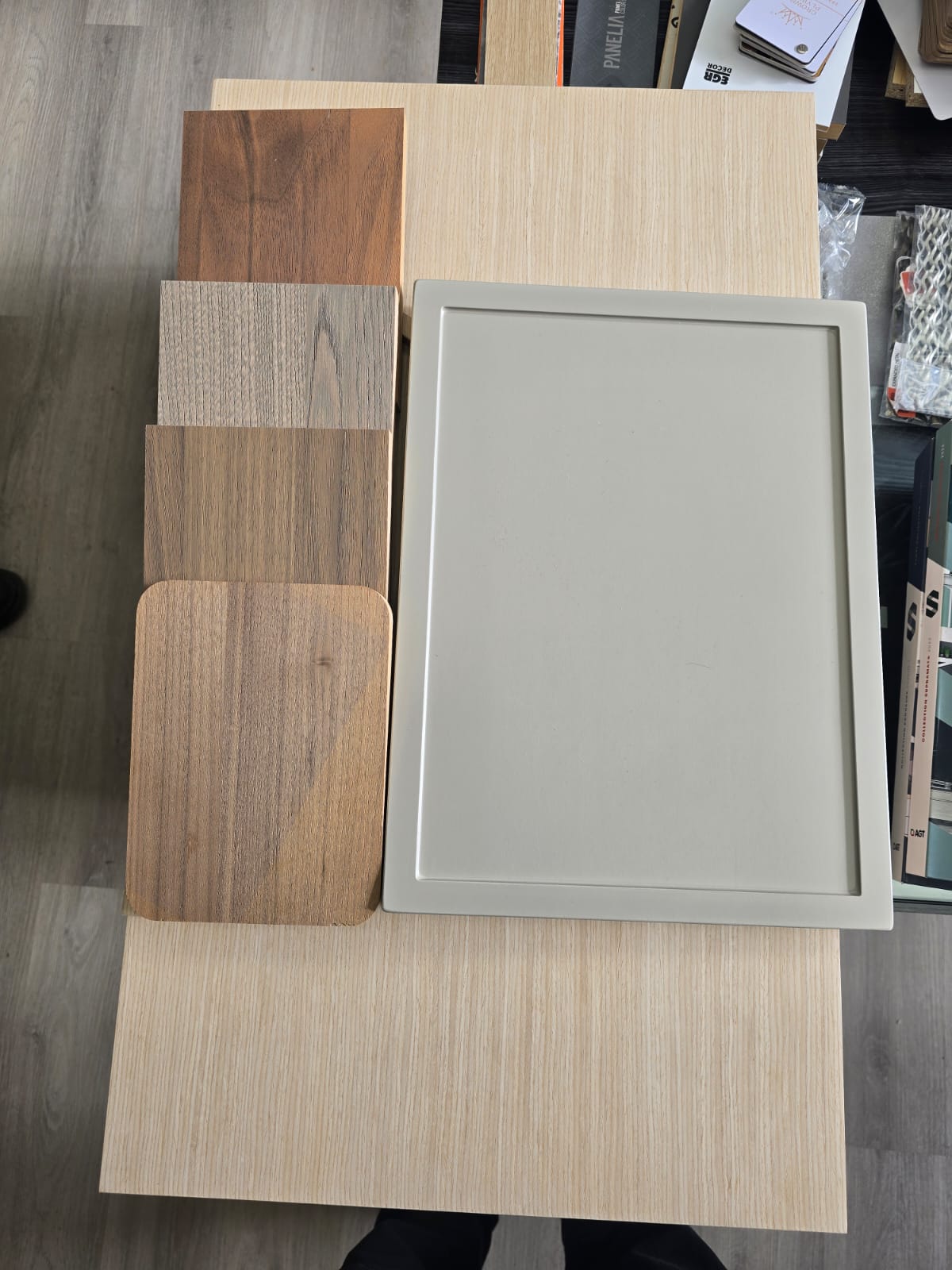
2. MDF: Smooth, Stable, and Ideal for Painted Finishes
MDF is commonly used for painted cabinetry and detailed door profiles.
Best for:
- Painted kitchens
- Shaker and custom door styles
- Wall panels and decorative millwork
Why we use it:
- Extremely smooth surface for paint
- Stable and consistent
- Excellent for detailed machining
Things to consider:
- Not ideal for high-moisture areas unless properly sealed
- Best paired with professional finishing
3. Plywood: Strength and Long-Term Durability
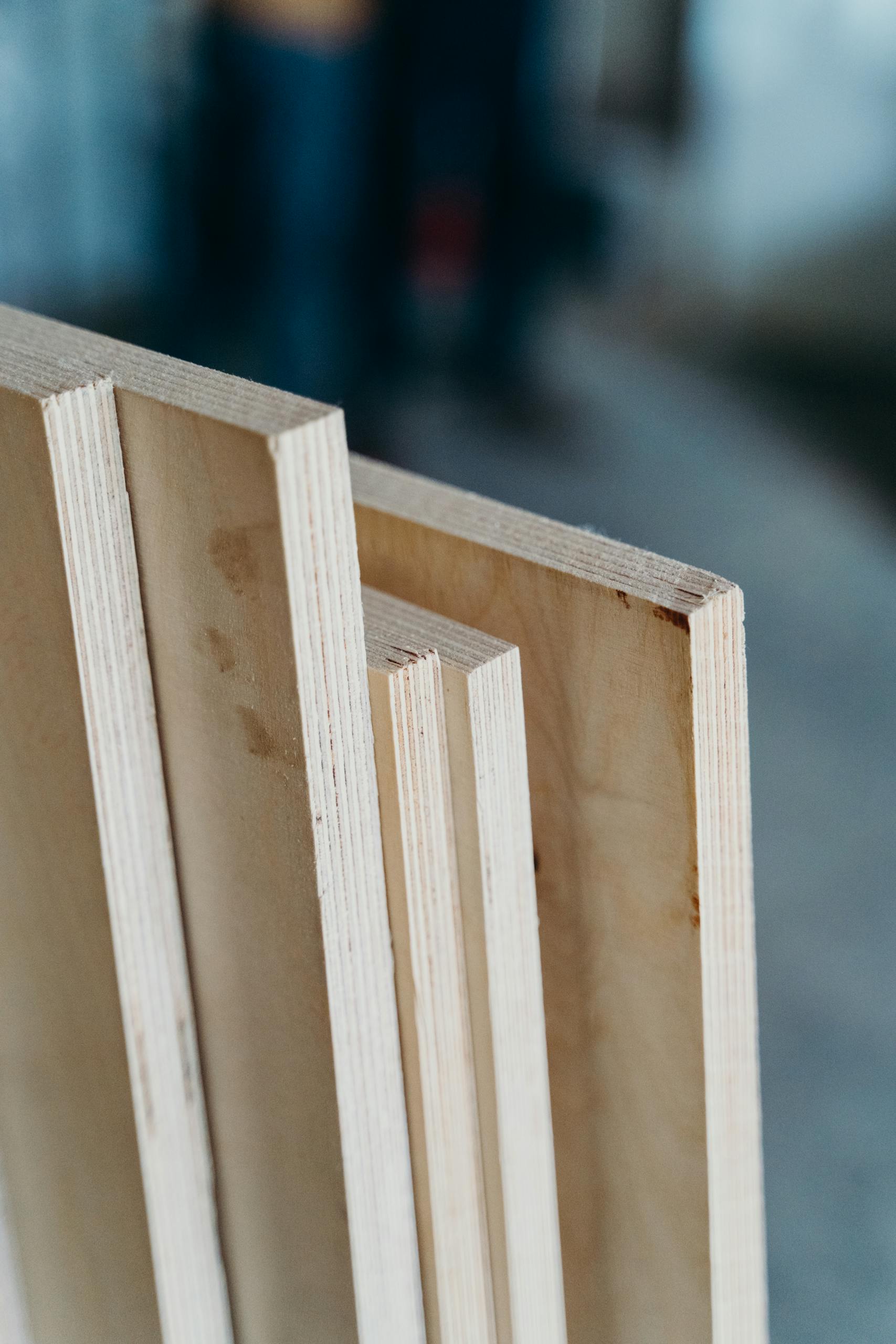
Plywood is a premium option for cabinet boxes and structural components.
Best for:
- Kitchen cabinet boxes
- Vanities
- High-use storage
Why it works:
- Strong and lightweight
- Better resistance to moisture than particle board
- Holds screws and hardware extremely well
This is often the go-to choice for clients who want long-term durability.
4. Veneer: Natural Wood Without the Movement Issues
PWood veneer gives you the look of real wood with added stability.
Best for:
- Feature walls
- Built-ins
- Modern cabinetry
- Commercial spaces
Advantages:
- Natural wood appearance
- More stable than solid wood
- Allows for large, consistent surfaces
Veneer is ideal when you want warmth and texture without the risks of solid wood movement.
5. Solid Wood: Timeless, but Requires Careful Use
Solid wood is beautiful, but it needs to be used intentionally.
Best for:
- Accents
- Floating shelves
- Select doors or trim details
Important to know:
- Wood expands and contracts with temperature and humidity
- Requires precise construction and finishing
- Not always ideal for large flat panels
When used correctly, solid wood adds character and depth that’s hard to replicate.
6. Matching Material to Budget and Longevity
A well-designed project doesn’t mean using the most expensive material everywhere.
Smart material selection often involves:
- Mixing materials strategically
- Using premium finishes where they matter most
- Prioritizing durability in high-use areas
This approach delivers a better result without unnecessary cost.
Final Thoughts
Choosing the right material is about balancing:
- Function
- Aesthetics
- Durability
- Budget
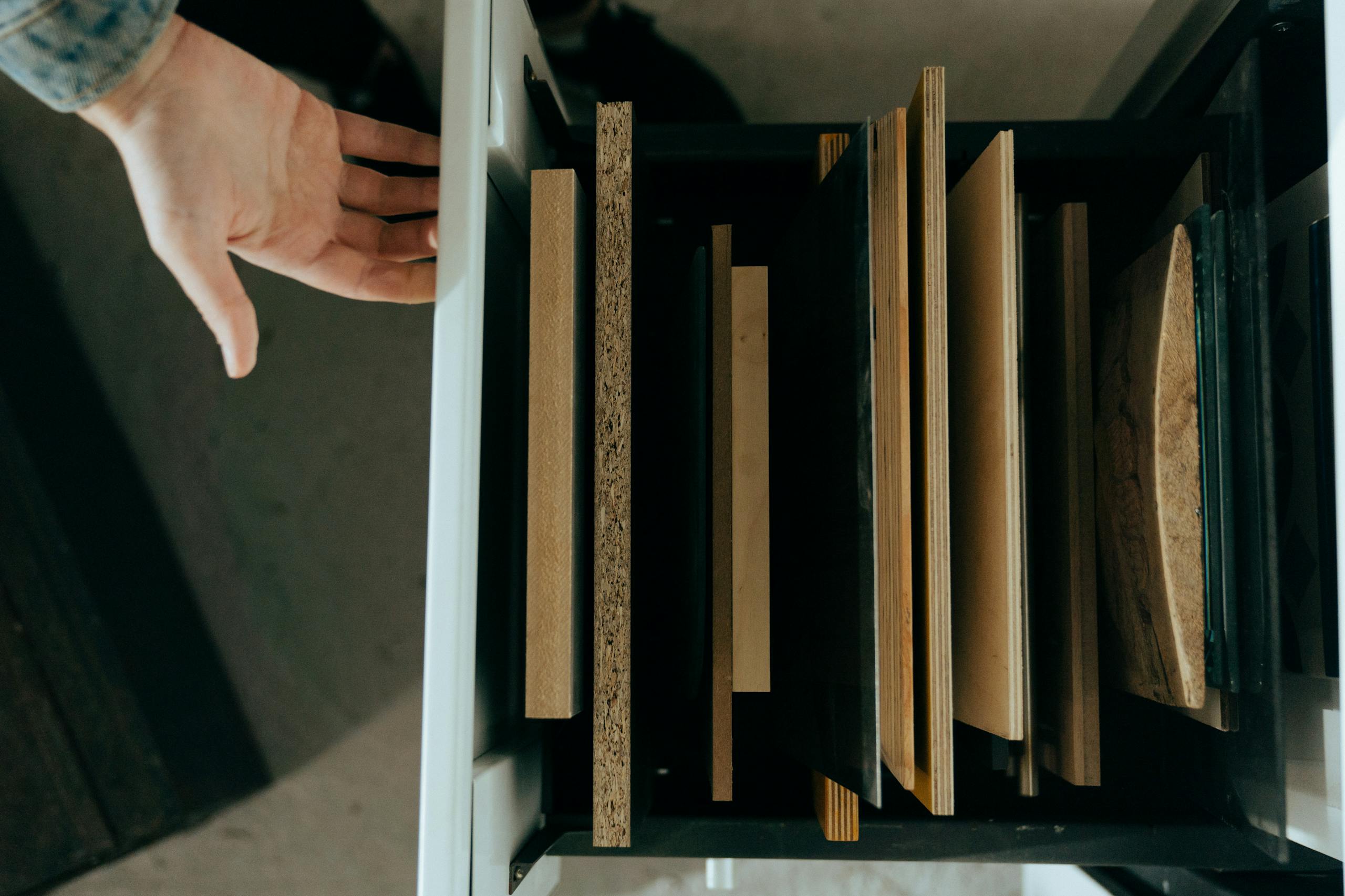
At Reve Design, every project is designed, fabricated, and installed in-house. That allows us to recommend materials based on real construction experience, not just samples.
If you’re planning a custom cabinetry or millwork project and want guidance on material selection, we’re always happy to help.